
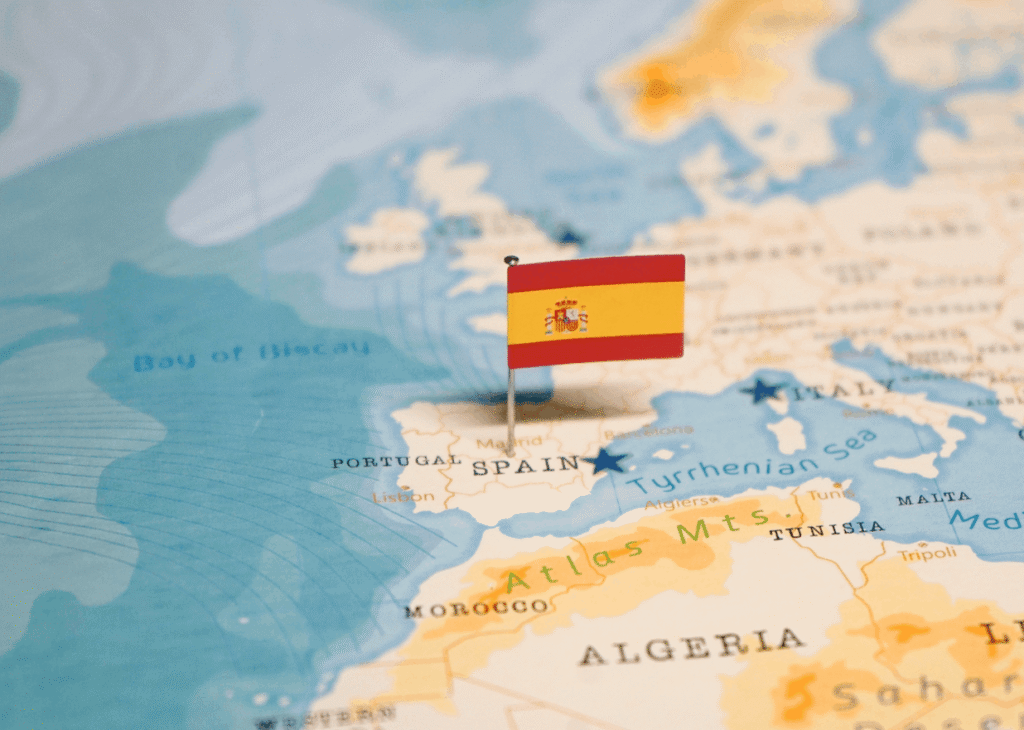
Places to visit in Spain can be grouped within one region or connected in a route through cities with different histories. Andalusia, the northern coast, Catalonia and the Balearic Islands do not offer one uniform climate or pace. A shared national border does not make the practical arrangements or the experience of each region identical.
Architecture, a museum collection, an urban walk and a coastal day take different amounts of time. This overview describes a range of places without making them an obligatory list. For a visitor travelling from Nigeria, arrival and departure days also belong in the itinerary rather than being counted automatically as full days of sightseeing.
Andalusia: three cities, more than one scale of visit
Seville brings architecture and flamenco into a possible programme. A visit to an individual monument and a walk through different quarters have different rhythms. An evening event is another part of the day, alongside the time already used for transport, queues, meals and daytime visits.
Granada adds a different historic setting. An interest in several cultural periods can be concentrated on one complex or spread across parts of the city. A broad description of the meeting of cultures does not establish how entry to a specific site is arranged. Its admission conditions remain a separate practical question.
In Córdoba, the Mosque-Cathedral provides a subject for understanding successive cultural and architectural layers. One building can support a detailed visit to the changing use of a place. That approach does not require several distant stops to be added to the same day for the programme to have substance.
Combining the three cities introduces additional journeys. Reaching stations, transferring to accommodation and checking in use time even though they are not sightseeing activities. The number of nights in a city is consequently not always the number of full visiting days.
The north: a museum, urban change and the coast
Bilbao offers the Guggenheim Museum and its surrounding urban environment as related but distinct interests. The design of the building, the collection or exhibition inside and a walk through the city are different parts of a visit. A person interested in one of them may allocate time differently from someone interested in another.
Looking at the exterior does not constitute a visit to a collection. Equally, a walk around a building can have its own architectural purpose without being an incomplete museum day. An itinerary described as including the museum needs to distinguish admission, a guided visit and free time in the area.
San Sebastián connects a coastal setting with food-related experiences. A restaurant meal, a market visit and a brief lunch involve different spending and time. The destination does not prescribe one correct way to eat, and the region’s reputation does not establish the conditions in a particular establishment.
Galicia introduces another landscape and regional food context. Combining it with northern cities still requires attention to distance and transport. The phrase “northern Spain” does not make all the places neighbours or establish the same weather across a whole route.
Barcelona, Toledo and Palma: different architectural questions
| Place | Possible focus | Form of visit |
|---|---|---|
| Barcelona | Modernisme and varied urban architecture | Individual buildings or walks through quarters |
| Toledo | A historic city with the heritage of different religious communities | Monuments considered alongside the surrounding streets |
| Córdoba | The Mosque-Cathedral and successive cultural layers | A detailed visit to a single complex |
| Palma | The Gothic cathedral and the historic city | An urban programme within an island stay |
Palma’s principal cathedral is primarily a Gothic monument. Later contributions to the interior do not make that overall architectural description Modernist. Distinguishing the structure from later interventions gives a clearer account than using one stylistic label for everything inside it.
Toledo and Barcelona are not equivalent routes because both contain many monuments. One visit may concentrate on a historic urban setting, another on a particular architect or period. A defined interest explains what the day involves without declaring one set of attractions more important than another.
An island, a mainland coast and an inland landscape
Palma de Mallorca belongs to an island itinerary, while Cádiz is on the mainland coast. Each introduces its own transport arrangements. The possibility of time by the water does not establish the location of a specific beach or how easily it can be reached from the chosen accommodation.
The Pyrenees, the Castilian plateau and the landscapes around Almería show other geographical settings. A natural area requires different preparation from a city museum. Terrain, access to the route and local conditions cannot be determined from a photograph or a straight-line distance.
When considering beautiful places to visit in Spain, the surrounding region can matter as much as an individual viewpoint. A scenic stop requiring a long return journey may take most of a day. That is a different commitment from visiting a site within walking distance of the accommodation.
Food as part of the regional visit
Gazpacho, jamón and seafood illustrate different culinary traditions, not the complete menu of every venue. Seasonal availability, service format and ingredients depend on the actual dish and establishment. The regional name alone does not establish what will be served or what a meal will cost.
A market, a cooking activity and a long meal can occupy as much time as a monument visit. They can also be brief intervals between other activities. Neither format needs to be presented as more authentic for everyone; the difference is in what the visitor has arranged and what happens during the day.
For religious, dietary or allergy-related requirements, information about a particular dish matters more than a general description of Spanish cuisine. A familiar dish name cannot establish the ingredients, preparation or handling at every restaurant. Those details belong to the conversation with the venue.
How much fits into the available days?
- A longer stay in one city leaves room to explore different districts.
- Several bases increase the variety of places while adding travel and check-in time.
- A coastal day still involves reaching the shore and returning.
- A museum programme needs the time inside as well as the journey there.
- An outdoor route depends on access and conditions, not only its length.
Comparisons of places in Spain to visit are clearer when the programmes have the same duration. A route with daily moves and several nights in one quarter answer different interests. The number of listed attractions alone does not show which programme leaves more time for any particular activity.
A Spain travel budget can distinguish international transport, accommodation, journeys within the country and paid activities. A quoted package and independent bookings need comparable inclusions before their totals mean the same thing. For expenses converted from naira, the date and basis of payment also affect the estimate.
Prices, booking rules, opening times and transport schedules are specific to the place and date. The regional examples explain the content of a trip, leaving its pace and eventual evaluation to the traveller. Routes around Italy provide another way to combine cities and natural settings, while the overview of ten holiday destinations compares broader formats.
Report an error
Identify the statement concerned and, where possible, a supporting source. Do not send passports, contracts or other documents containing personal information.
Open email or email contact-international-immigration@gmail.com.
Discussion
Comments appear after moderation.